
Maximizing Your Wealth: The Power of a 401(k) and Long-Term Investment Returns
When it comes to building long-term wealth and securing a comfortable retirement, few financial tools are as powerful or accessible as the traditional 401(k). For millions of workers, the 401(k) is the cornerstone of their financial planning. Beyond just being a convenient way to stash away savings, maintaining and consistently contributing to a 401(k) can dramatically increase your overall investment returns through a combination of tax advantages, employer matching, and the undeniable magic of compounding interest.
The Immediate Boost: Employer Matching
Perhaps the most lucrative feature of a workplace 401(k) is the employer match. Many companies offer to match a percentage of the contributions their employees make, often up to a certain limit (such as matching 100% of contributions up to 3% or 5% of your salary).
<p>Failing to contribute enough to capture your full employer match is, quite literally, turning down free money. From an investment perspective, an employer match provides an immediate, guaranteed 100% return on your invested dollars before the market even has a chance to fluctuate. Over a career spanning decades, capturing this match significantly accelerates the growth of your portfolio.
The Power of Tax Deferred Growth
One of the primary ways a 401(k) maximizes your returns is through tax efficiency. With a traditional 401(k), your contributions are made with pre-tax dollars. This lowers your taxable income for the year, meaning Uncle Sam is taking a smaller cut today, leaving you with more capital to actually put to work in the market.
Consider the alternative: if you invest money in a standard taxable brokerage account, you must pay income tax on those earnings before you invest. Furthermore, every time your mutual funds or stocks pay dividends or realize capital gains within a taxable account, you may owe taxes that year. In a 401(k), your investments grow tax-deferred. You do not pay taxes until you begin making withdrawals in retirement. This allows your entire balance—including money that would have otherwise gone to taxes—to stay invested and compound over time.
The Engine of Wealth: Compound Interest
Albert Einstein reportedly called compound interest the eighth wonder of the world, and your 401(k) is designed to harness it fully. Compounding occurs when your investments generate earnings, and those earnings then generate their own earnings.
Because retirement accounts are designed to be untouched for decades, they provide the ideal environment for compounding to work its magic. Consistent, long-term contributions mean you are buying assets across various market cycles—a strategy known as dollar-cost averaging. When the market dips, your regular 401(k) contribution buys more shares at a discount; when the market rises, your existing shares grow in value. By maintaining your contributions through both bull and bear markets, you avoid the perils of emotional timing and set yourself up for exponential growth.
Because retirement accounts are designed to be untouched for decades, they provide the ideal environment for compounding to work its magic. Consistent, long-term contributions mean you are buying assets across various market cycles—a strategy known as dollar-cost averaging. When the market dips, your regular 401(k) contribution buys more shares at a discount; when the market rises, your existing shares grow in value. By maintaining your contributions through both bull and bear markets, you avoid the perils of emotional timing and set yourself up for exponential growth.
The Danger of Cashing Out Early
While maintaining a 401(k) supercharges your returns, interrupting it can severely damage your financial future. Job changes are the most common culprit. Many people make the mistake of cashing out their 401(k) when switching employers, rather than rolling it over into a new employer’s plan or an Individual Retirement Account (IRA).
Cashing out early triggers ordinary income taxes plus a steep 10% early withdrawal penalty (if you are under the age of 59½). More importantly, you rob yourself of future compounding. A withdrawal of $20,000 in your thirties might not sound catastrophic, but missing out on 30 years of market growth on that money could easily cost you six figures by the time you reach retirement age.
Conclusion
Building wealth is rarely about finding a single magic investment; it is about consistency, discipline, and utilizing the right structures. A 401(k) offers a trifecta of wealth-building benefits: free money via employer matches, tax-advantaged growth, and a seamless mechanism for automated, long-term investing. By opening a 401(k), capturing your full employer match, and diligently maintaining your contributions through the decades, you can dramatically increase your investment returns and pave the way for a secure, prosperous retirement.
-

Maximizing Your 401k
Maximizing Your Wealth: The Power of a 401(k) and Long-Term Investment Returns When it comes…
-
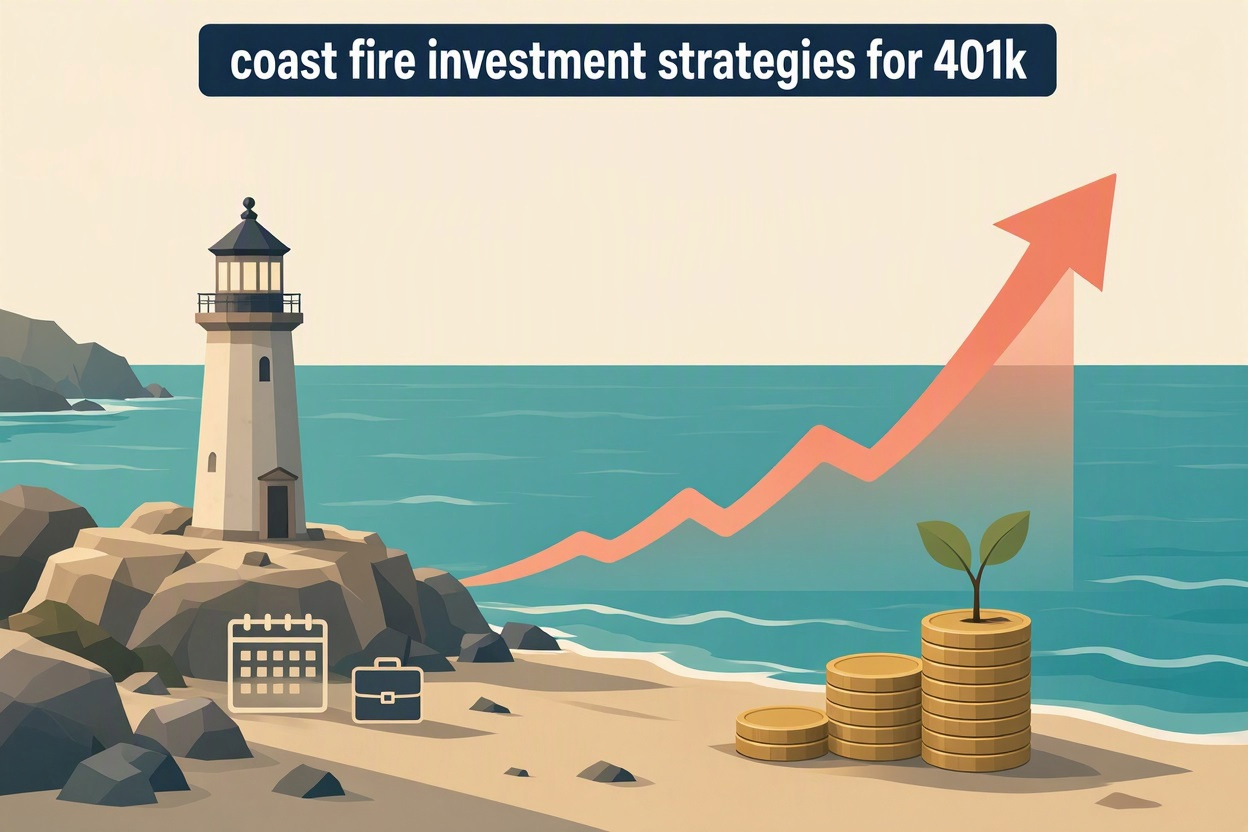
Coast FIRE and your 401k
Managing your 401k properly is a must have if you want to achieve COAST FIRE.…
-

How to Protect my 401k from a market crash
How to Protect my 401k from a market crash And How a Simple Rules‑Based Tool…

Maximizing Your Wealth: The Power of a 401(k) and Long-Term Investment Returns